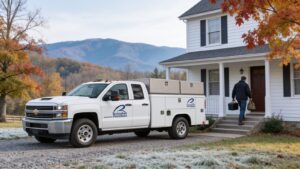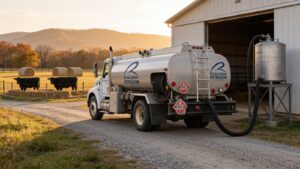
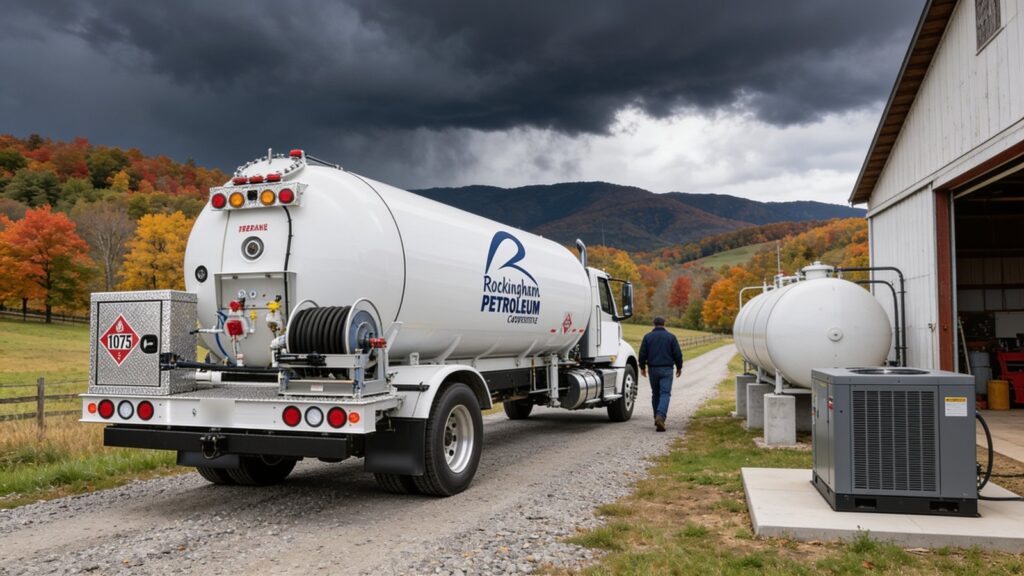
On a Shenandoah Valley farm, a power outage isn’t just a dark kitchen. It’s fans that stop in the poultry houses, a milk tank that starts warming, a well pump that quits and waterers that run dry. A propane generator is how a lot of Rockingham County farms keep running when a fall windstorm or an early ice storm takes the lines down. This is a good time of year to make sure yours is ready, and that there’s fuel in the tank when it counts.
Why Storm Season Matters on the Farm
Fall in the Valley brings its share of rough weather. Late-season tropical remnants can push heavy rain and wind over the Blue Ridge, and by November we start watching for ice. Outages on rural lines can last longer than in town because crews work their way out from the main roads.
For livestock and poultry operations, even a few hours without power adds up fast:
- Poultry houses depend on ventilation and heat. Birds can be stressed in a short time without them.
- Dairy needs milking equipment and bulk tank cooling on a fixed schedule.
- Water for every animal on the place usually depends on an electric well pump.
- Grain bins and dryers may still be running after a late harvest.
Why Farms Choose a Propane Generator
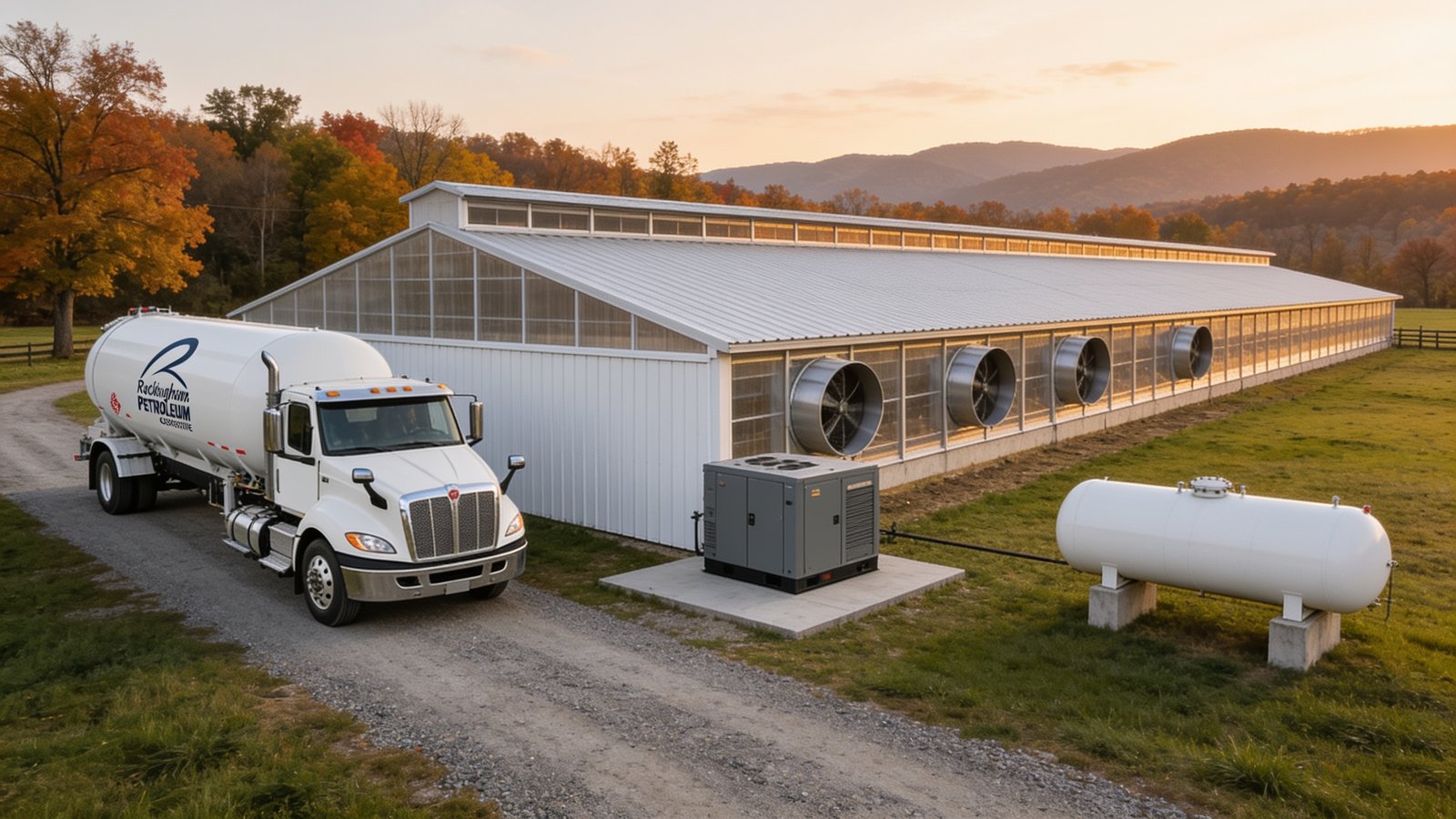
Standby generators can run on several fuels, but propane has some real advantages on a farm:
- It stores well. Propane doesn’t go stale in the tank the way gasoline can, so the fuel is ready even if the generator sits idle for months.
- No hauling cans. A properly sized tank feeds the generator directly, so nobody is driving to town for fuel in the middle of a storm.
- Clean burning. Propane burns cleanly, which is easier on the engine over the long run.
- One fuel, many jobs. Many farms already use propane for brooding, barn heat, grain drying or the farmhouse, so the generator can fit into a supply you already manage.
If you’re adding a standby generator, your electrician or generator installer will handle the unit and the transfer switch. Give us a call early in that process so we can talk through tank size and delivery for the load you plan to run.
Sizing Your Propane Supply for an Outage
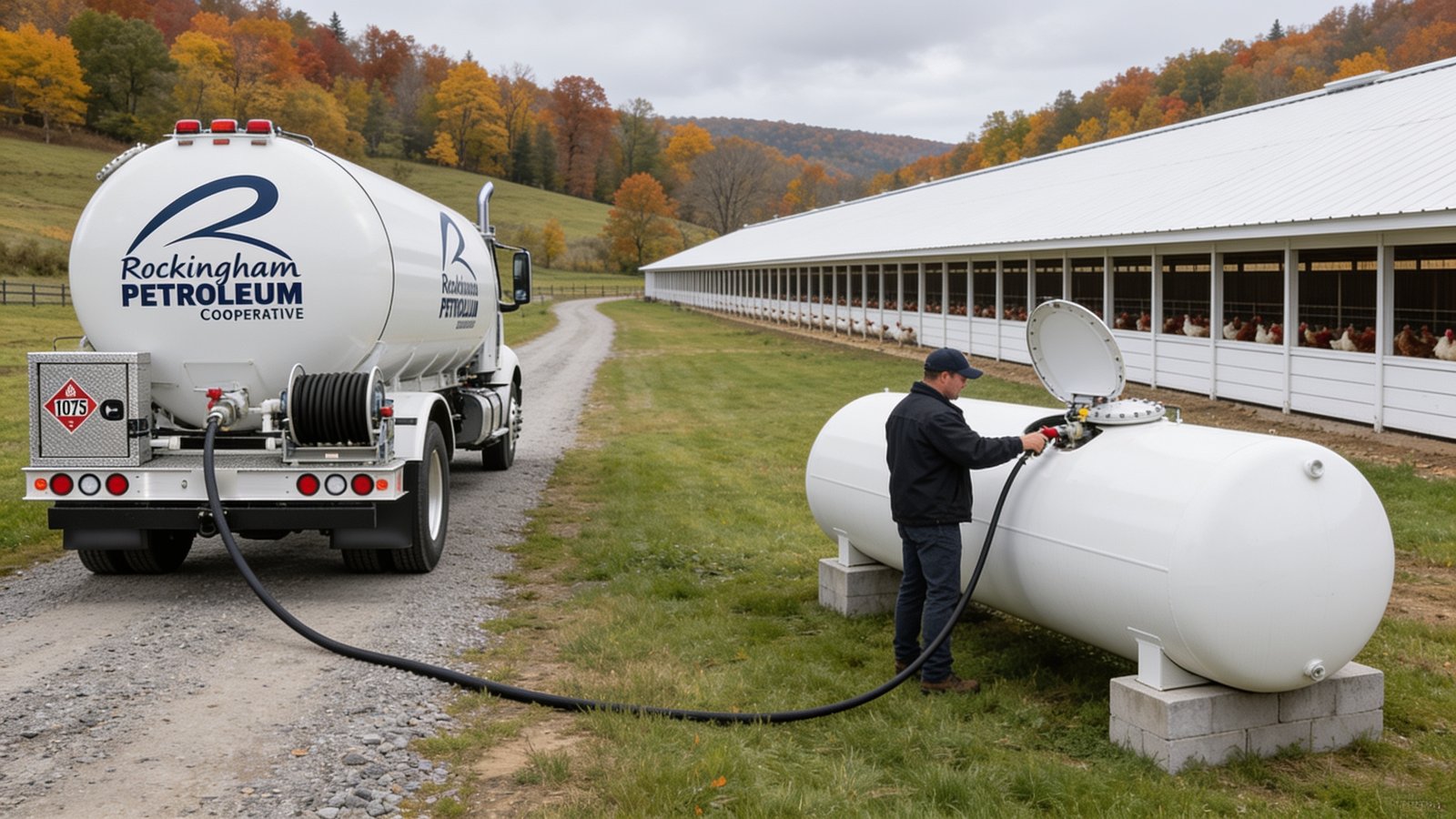
How much propane a generator uses depends on its size and how hard it’s working. A generator carrying a full load of fans and pumps burns a lot more than one keeping a few lights and a refrigerator on. Your generator’s manual lists fuel use at different loads, and that’s the best place to start.
A few planning questions to work through with your installer and with us:
- What has to run during an outage, and what can wait?
- How many days do you want to be covered without a delivery?
- Is the generator sharing a tank with other propane equipment?
- Can a delivery truck reach the tank in mud, snow or ice?
It’s also worth thinking about what happens if an outage stretches past a day or two. Roads may be blocked, and every farm in the area is calling at once. A tank that’s sized with a few extra days of cushion gives you breathing room while crews clear the roads.
We set residential and farm tanks in 120, 250, 500 and 1,000-gallon sizes, and we can help you match the tank to the job.
Your Fall Generator Checklist
Before the weather turns, walk through these steps:
- Check the tank gauge. Don’t head into storm season with a low tank. If a big storm is in the forecast, we’d much rather fill you a few days ahead than try to reach you after trees are down.
- Run the generator under load. Most standby units exercise themselves weekly, but a test with real farm equipment running tells you more.
- Service the engine. Oil, filters and spark plugs per the manufacturer’s schedule. Generators that sit can surprise you.
- Clear around the unit and the tank. Keep brush, leaves and stored equipment away, and make sure the tank stays reachable for delivery.
- Know your transfer switch. Make sure everyone who might be home during an outage knows how the system switches over.
- Talk to us about automatic delivery. On automatic delivery, we schedule fills based on your usage so you’re not watching the gauge yourself.
A Safety Reminder
Generators belong outdoors, away from doors, windows and air intakes. Never run one inside a barn, garage or poultry house, even with the doors open. Carbon monoxide builds up quickly and has no smell. If you ever smell propane (that rotten-egg odor) near a tank or a line, get everyone away from the area, don’t operate switches or engines nearby, and call for help from a safe distance.
Your Local Propane Partner
Rockingham Petroleum Cooperative has served Valley farms since 1942, and we still think like farmers about uptime. Our propane team delivers to farms across Rockingham County, the wider Shenandoah Valley and into West Virginia, and we offer leak testing, service and repair on the propane systems we supply. Member-owners and the many neighbors we serve who aren’t members get the same dependable delivery.
Storms will come. A ready propane generator and a full tank mean your animals and your operation keep running when they do. Give us a call at (540) 434-4321. We’re happy to help you plan your propane supply before storm season.