When the last load of corn or soybeans leaves the field, there’s a short window before winter when the whole farm shifts gears. The combine heads to the shed, the mowers and weed trimmers get put away, and the equipment you’ll lean on all winter moves to the front of the line. How you handle gasoline and diesel during that fall equipment transition has a lot to do with how smoothly everything starts up again, whether that’s next week or next April.
Start Your Fall Equipment Transition: Storing, Switching or Working
A simple way to plan is to split your equipment into three groups:
- Going into storage: combines, hay equipment, mowers, string trimmers, ATVs you won’t use much, and other seasonal machines.
- Switching jobs: tractors that go from field work to feeding, loaders that start pushing snow, trucks that start hauling livestock.
- Standby: generators, chainsaws and anything that has to start the first time you pull the cord in an emergency.
Each group needs something a little different when it comes to fuel. It helps to walk the equipment shed with a notepad before the first hard freeze and jot down which group each machine falls into. That list becomes your fall to-do list, and it’s handy again in March when you’re bringing everything back out.
Gasoline Equipment Going Into Storage
Small engines are where fuel problems show up first. Regular E10 gasoline contains ethanol, which attracts moisture and can break down over a long winter in a carburetor or a fuel tank. That’s how you end up with a mower that won’t start in the spring, or a gummed-up chainsaw just when a tree comes down.
A few habits help:
- Use non-ethanol gasoline in small engines, especially anything that will sit for weeks or months. We carry non-ethanol 87, 89 and 93 octane at our Harrisonburg, Bridgewater and Broadway stores.
- Follow the manufacturer’s storage instructions. Some recommend running the engine dry, others recommend a full tank with stabilizer. Check your manual.
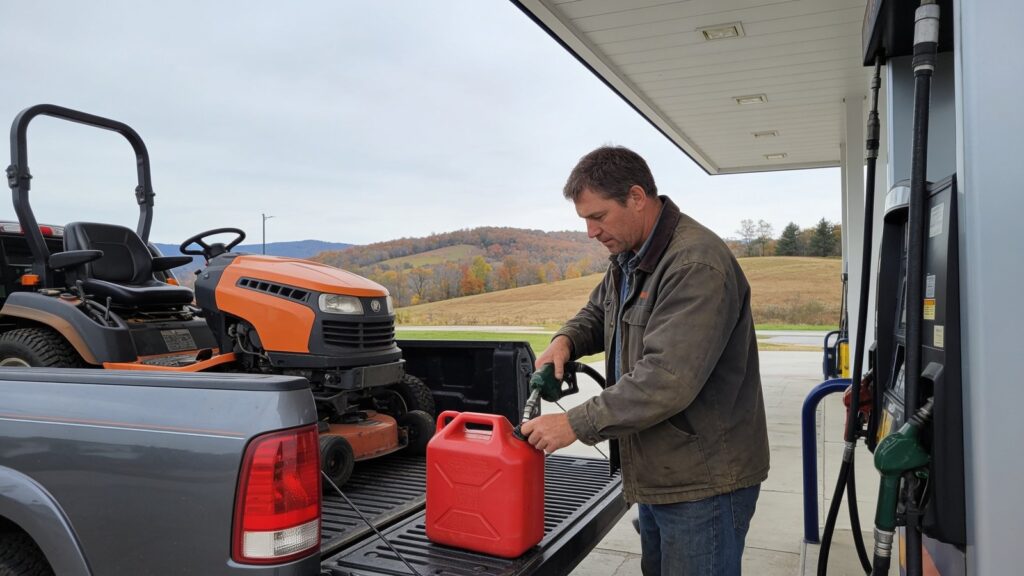
- Use clean, approved fuel cans, and label them so the mixed two-cycle fuel doesn’t end up in the wrong machine.
- Don’t keep old gas around. If a can has been sitting since spring, use it up in equipment that runs regularly rather than storing it another season.
Diesel Equipment Heading Into Winter
For diesel tractors, loaders and trucks that keep working through the winter, the big concern is cold weather. Diesel can gel when temperatures drop, which clogs filters and stalls engines.
Here’s where timing your fill matters. Our winter diesel comes pre-blended with a premium pour point additive, so once winter fuel is in your farm tank, there’s no extra treatment to add. Fall is a good time to:
- Run your summer fuel down and fill with winter diesel before the hard freezes
- Change fuel filters on equipment that will work all winter
- Check the farm tank for water and drain it if needed
- Confirm which tanks hold off-road (dyed) diesel for farm equipment and which hold on-road diesel for trucks
Don’t Forget the Oil and Fluids
Fuel gets the attention, but fall is also the right time to change engine oil and check hydraulic fluid, gear oil, grease points and antifreeze. Fresh oil before storage keeps acids and moisture from sitting in the engine all winter, and the right coolant protects blocks from freezing.
Our Harrisonburg main office carries a full line of farm, commercial and automotive lubricants, including FS brand products like Suprex Gold and FS Engine Guard, along with Shell and Mobil. Our Bridgewater and Broadway stores stock automotive lubricants for quick pickups.
Plan Your Winter Fuel Deliveries Now
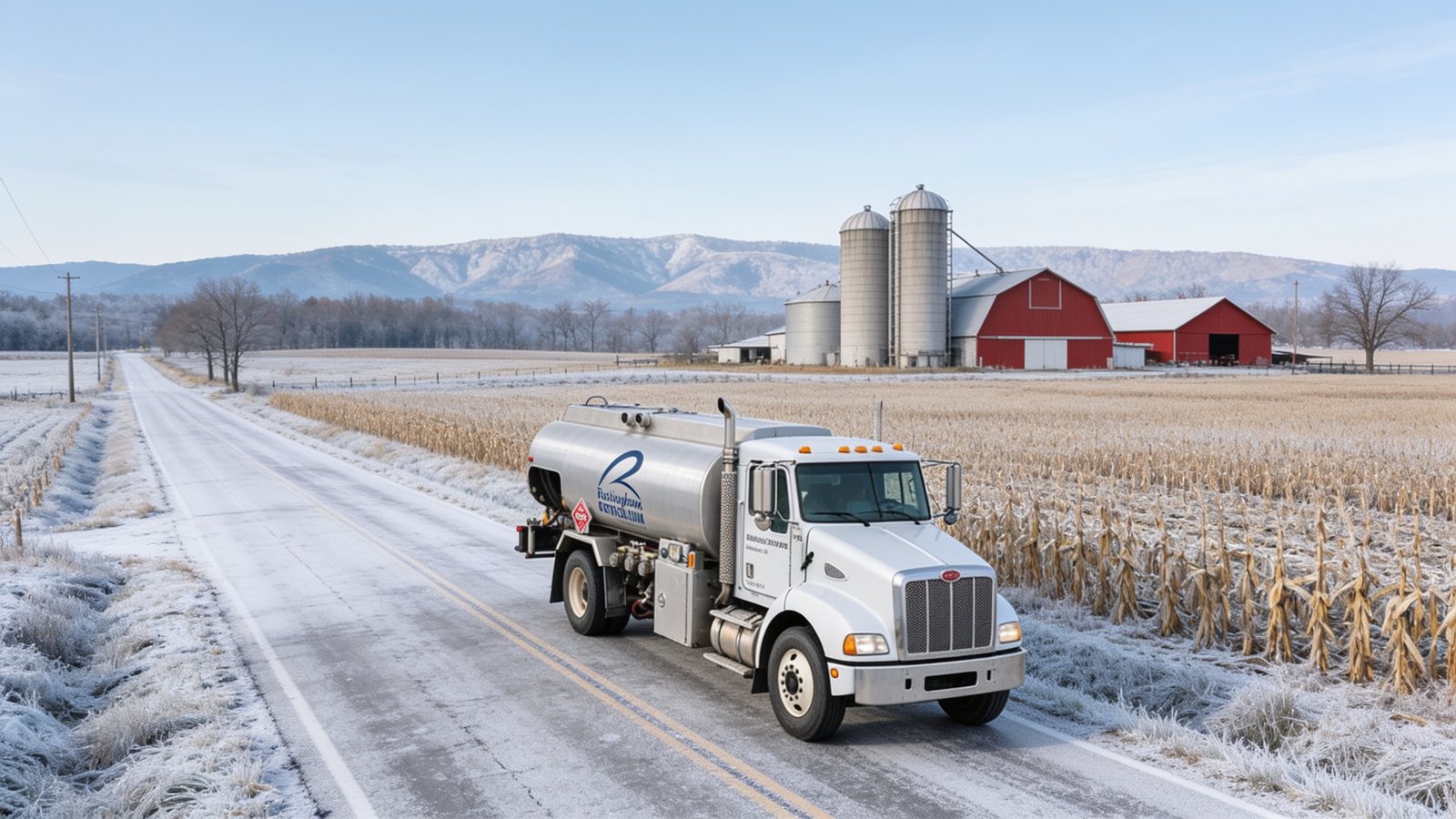
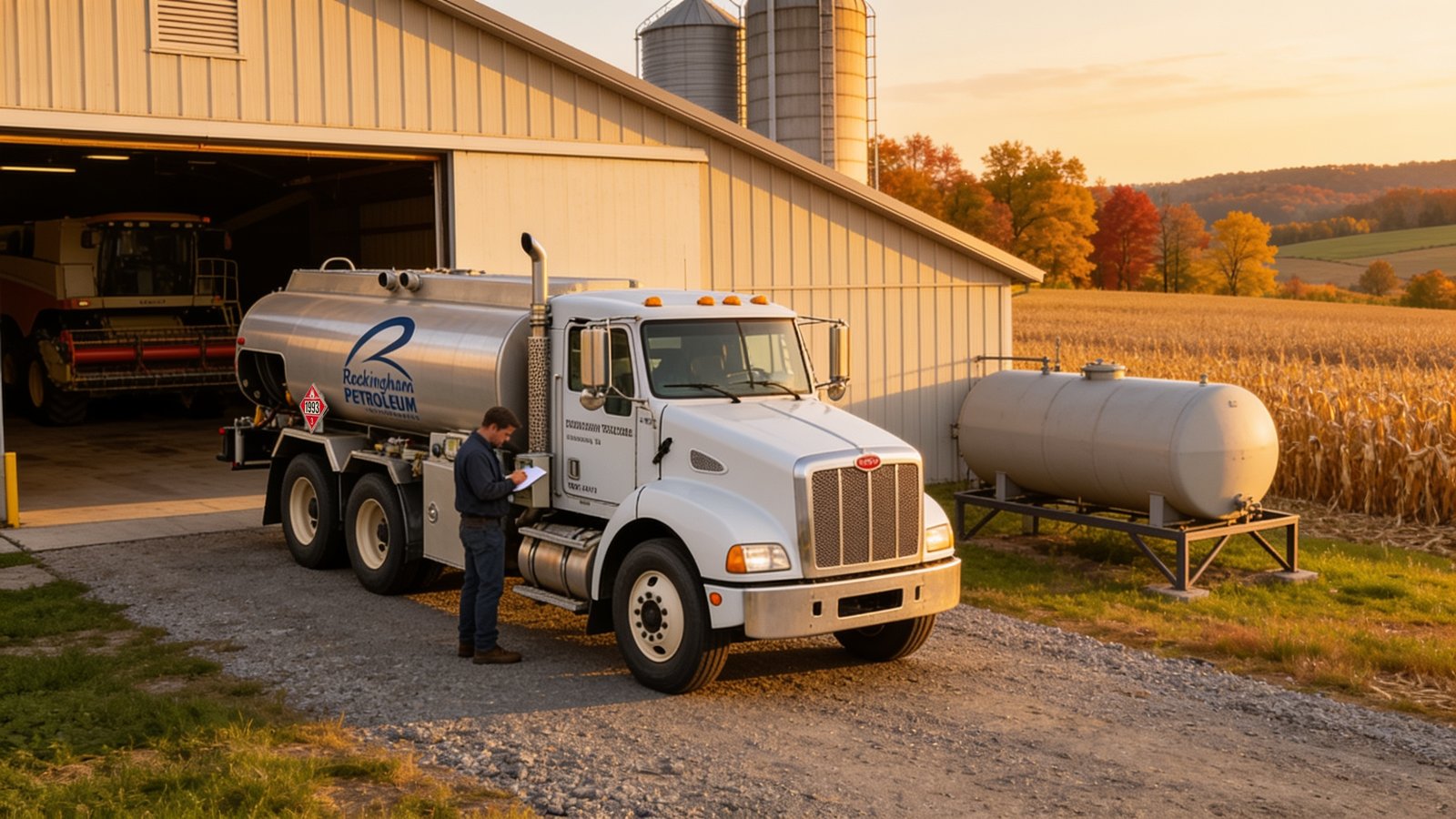
Once equipment is sorted, take a look at your farm fuel tanks. If diesel use stays steady all winter for feeding and snow work, your delivery schedule may need to change too. Our team can set up automatic delivery or adjust your schedule so your diesel tank stays full through the cold months.
A Word on Standby Equipment
Generators, chainsaws and backup pumps are the machines you need most when you least expect it. Treat them like stored equipment, with fresh non-ethanol fuel or a properly stabilized tank, but start them once a month through the winter so you know they’ll run when a storm knocks out power or drops a tree across the lane. Keep a labeled can of fresh fuel set aside just for them, and rotate it into regular use every few months.
Rooted in Rockingham County Since 1942
Rockingham Petroleum Cooperative has served Valley farms for more than 80 years, and we still plan our year around the farm calendar. Members and non-members alike get the same dependable delivery and the same honest advice from people who live here.
Your Fall Equipment Transition Checklist
- Sort equipment into storage, switching and standby groups
- Use non-ethanol gasoline in small engines and stored equipment
- Fill farm tanks with treated winter diesel before hard freezes
- Change oil and filters, and check coolant and hydraulic fluid
- Review your delivery schedule for the winter months
A careful fall equipment transition now pays off in fewer surprises all winter and an easier start in the spring. Stop by our Harrisonburg, Bridgewater or Broadway store, or give us a call at (540) 434-4321. We’re happy to help.