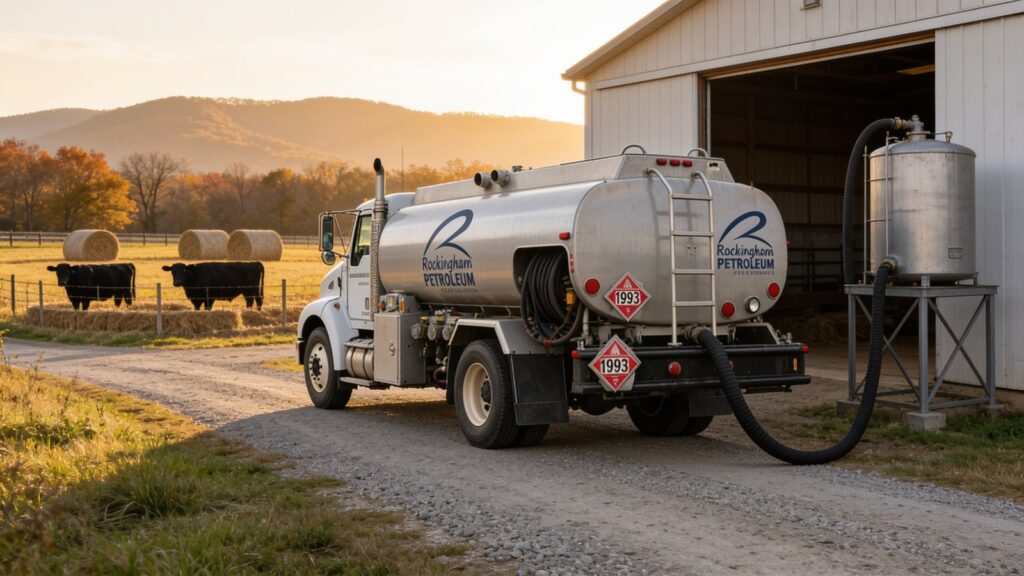
Once the pastures in Rockingham County start to slow down in the fall, the work on a livestock farm doesn’t stop. It changes. The tractor that cut and baled all summer is now moving round bales to the feeding area every morning, the skid steer is scraping lots, and the cattle trailer is on the road to the sale barn. All of that runs on diesel, and on a cold January morning nobody wants to find the farm tank low. A little bulk diesel delivery planning now keeps feeding season running smoothly.
How Fall and Winter Change Your Diesel Use
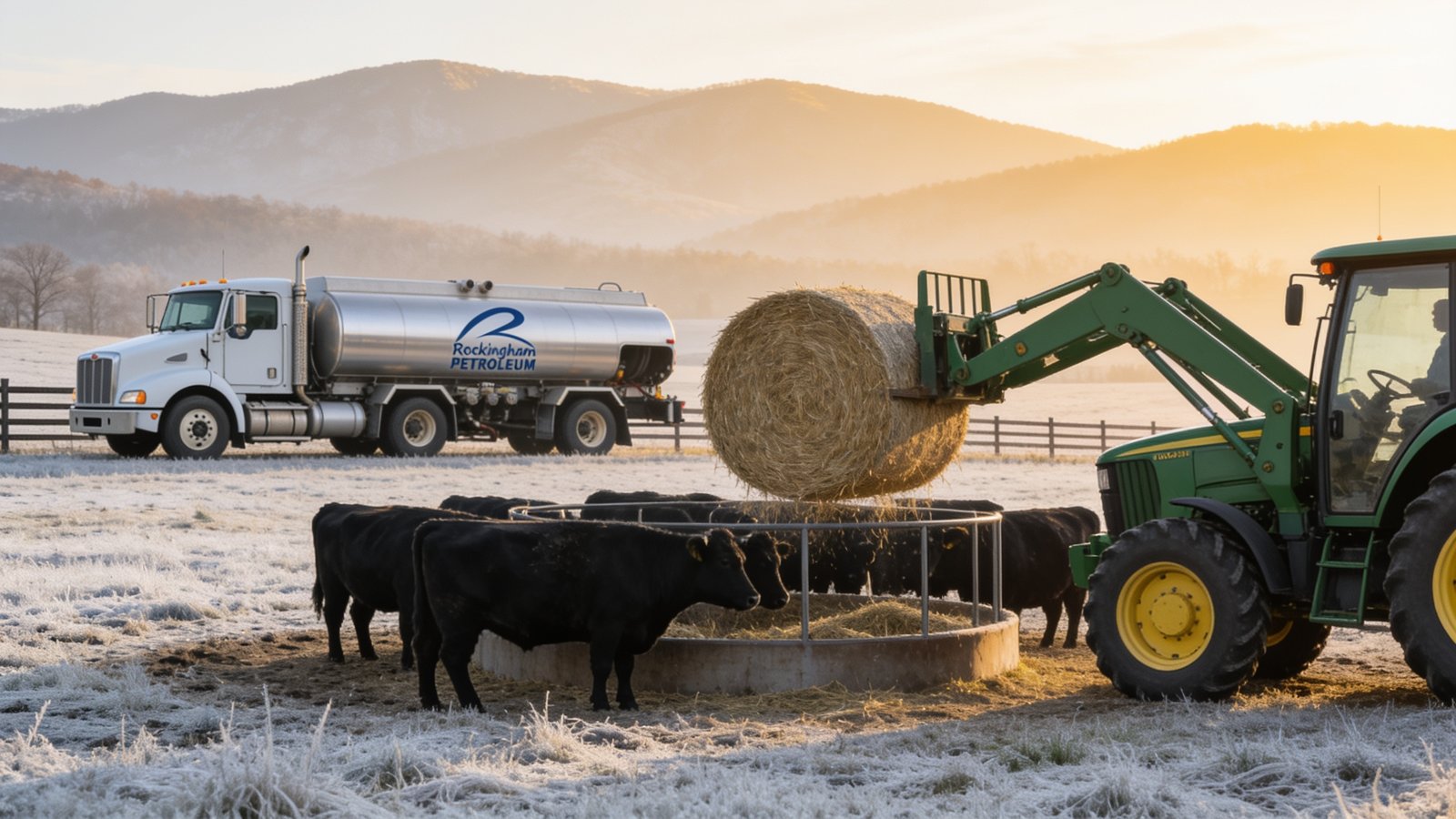
Summer diesel use on a hay and cattle operation tends to come in big bursts: a few heavy weeks of cutting, raking and baling. Feeding season is different. It’s steady, every day, in all kinds of weather.
- Daily feeding: moving bales and running a bale processor or mixer adds up, one morning at a time.
- Cold starts and idling: engines tend to idle longer on cold mornings while they warm up.
- Lot and barn work: skid steers and loaders handle manure, bedding and snow.
- Hauling: fall is when calves and cull cows move, so trucks and trailers see more road miles.
Weather plays a big part too. A wet December can mean more loader work in muddy lots, and a stretch of deep snow can double the hours on the tractor that keeps the feed road open. Building some slack into your diesel plan covers those weeks.
Look back at last winter’s deliveries if you have them. That’s the best guide to how fast your farm tank drops from December through March.
Scheduling Bulk Diesel Deliveries Around Feeding Season
A few habits make farm diesel delivery easier on everyone:
- Fill before the weather turns. A full tank going into December means one less worry when the first ice storm hits.
- Order with room to spare. Call when the tank still has a week or two of fuel left, not when it’s down to the last few inches. Routes get busy after a cold snap.
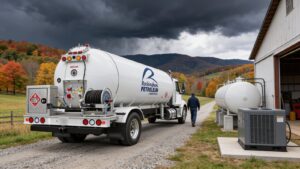
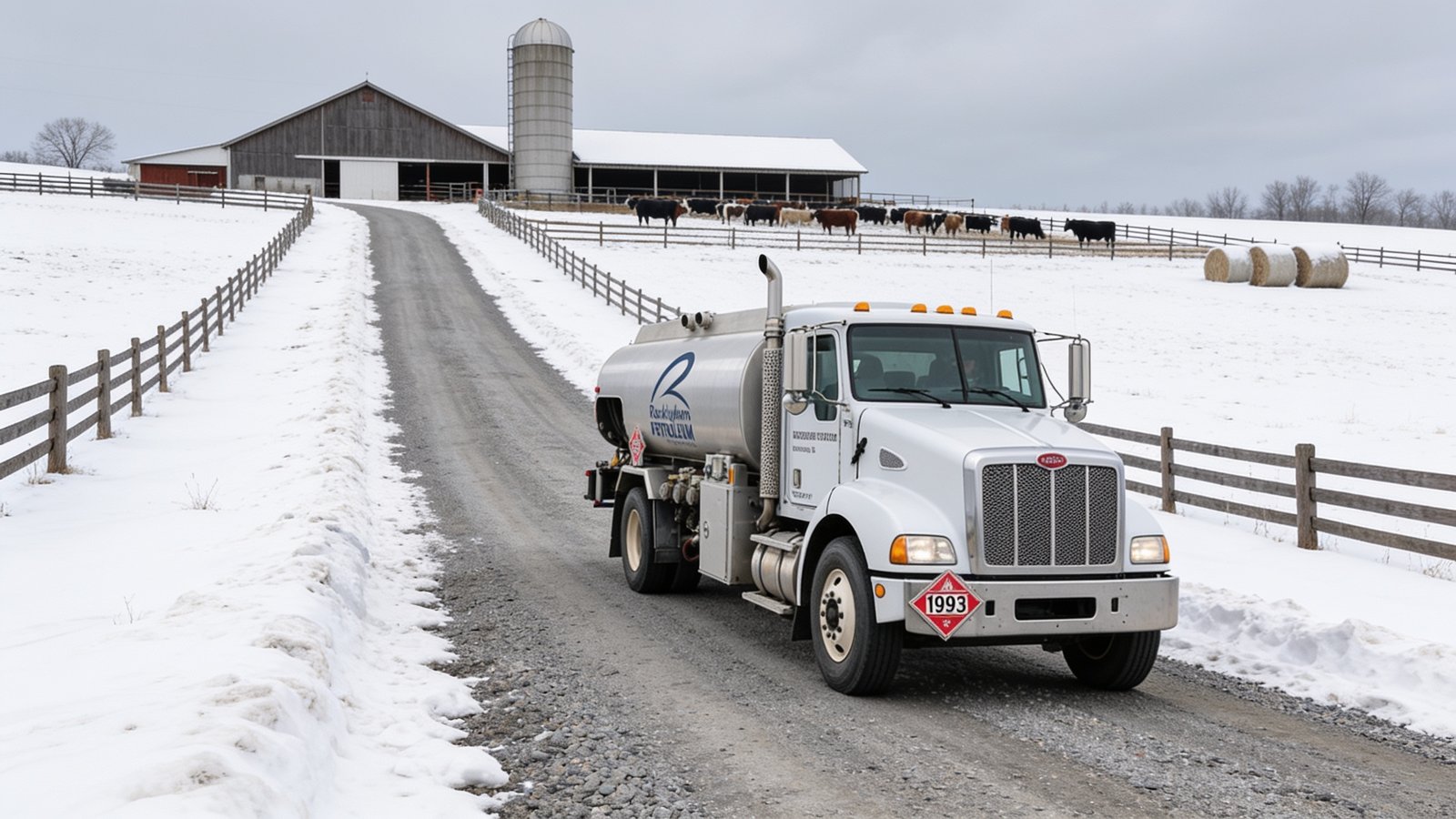
- Keep the lane open. Our trucks need a firm, reachable path to your tank. Mud season and snow can turn a good lane into a problem, so plan where the tank sits and keep the drive clear.
- Ask about automatic delivery. We can schedule deliveries based on your usage history so the tank gets filled before you have to think about it.
Winter Diesel That’s Already Treated
Diesel fuel can gel in the cold. As temperatures drop, waxes in the fuel begin to thicken and can clog filters, which is the last thing you want with hungry cattle waiting at the gate. Many farmers have spent winters pouring additive into the tank and hoping they got the ratio right.
Our winter diesel comes pre-blended with a premium pour point additive, so there’s no extra winter treatment to add. When we fill your tank in cold weather, it’s ready for Shenandoah Valley winters as delivered. That’s one less job on the to-do list and one less thing to go wrong on a 10-degree morning.
On-Road or Off-Road Diesel?
We deliver both, and on a livestock farm you may use both:
- Off-road (dyed) diesel is for farm equipment that isn’t driven on public roads, like tractors, skid steers and loaders.
- On-road (clear) diesel is for trucks and vehicles driven on public roads, including the pickup or truck that pulls your stock trailer.
If you’re unsure which tank should hold what, or whether you need a second tank, we’re glad to talk it through.
Keep Your Farm Diesel Clean Through the Winter
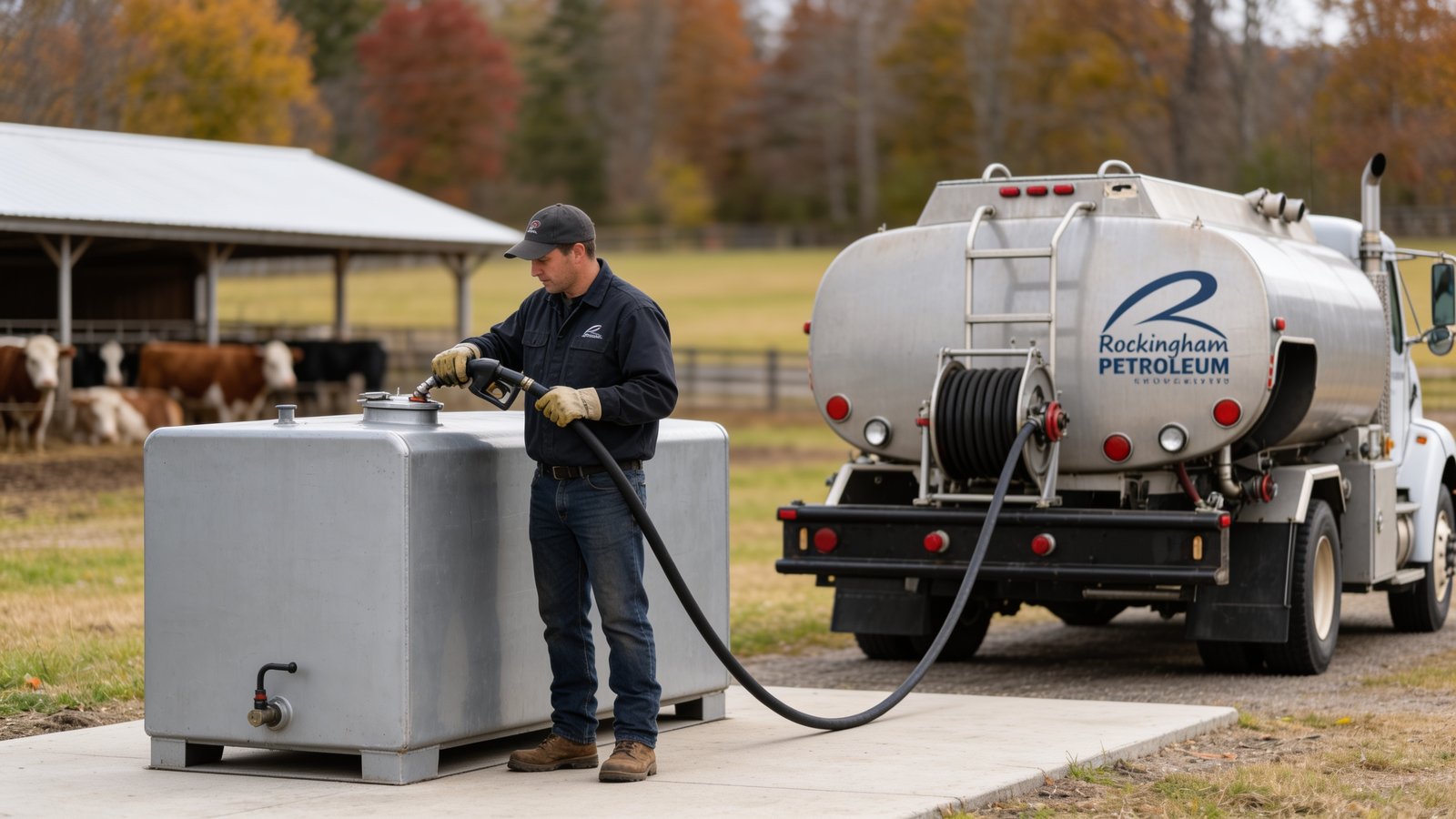
Clean fuel protects expensive engines. Before winter, take a quick look at your storage:
- Check the tank, fittings and hose for leaks, cracks or damage
- Look for water in the bottom of the tank, which can lead to rust and fuel problems
- Replace the dispenser filter if it’s due
- Make sure caps and vents are in good shape so rain and snowmelt stay out
If your tank sits low on a slope or in a spot where snowmelt pools, it’s worth thinking about whether it’s in the best place for winter. A tank that’s easy to reach, on solid ground and protected from runoff makes every delivery safer and keeps water out of your fuel. If you’re not sure, ask our driver on the next delivery. They see a lot of farm tanks and are happy to share what works.
A Partner That Knows Livestock Farms
Rockingham Petroleum Cooperative has served Valley farms since 1942, and agriculture is still at the heart of what we do. Our drivers deliver to cattle, dairy and poultry farms across Rockingham County and the Shenandoah Valley. We understand that a missed delivery during feeding season isn’t an inconvenience, it’s a problem for your animals. As a member-owned cooperative, we’re here for farm families for the long haul, and every customer gets the same reliable service.
Your Feeding Season Diesel Checklist
- Estimate your winter diesel use from last year’s deliveries
- Fill your farm tank before December
- Set up automatic delivery or a regular ordering routine
- Keep the delivery lane clear and firm all winter
- Inspect tanks, hoses and filters before the cold sets in
With a full tank of treated winter diesel and a delivery plan in place, feeding season gets a lot simpler. Give us a call at (540) 434-4321. We’re happy to help you set up bulk diesel delivery for your farm.