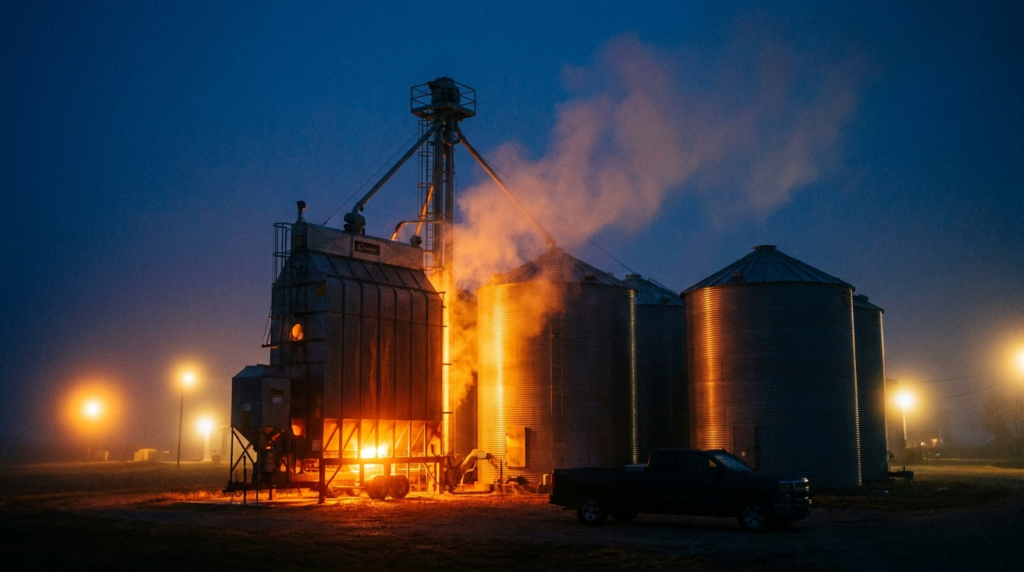
Corn drying is the least forgiving fuel demand on the farm. A combine that runs out of diesel sits still until you fill it. A dryer that runs out of propane in the middle of a batch is a different kind of problem — wet grain in the bin, a stalled unload, and a line of trucks with nowhere to go.
The good news is that grain drying demand is predictable. If you do the arithmetic in September, you can go into peak harvest knowing your dryer will run when you need it.
Know Your Draw Before the First Batch
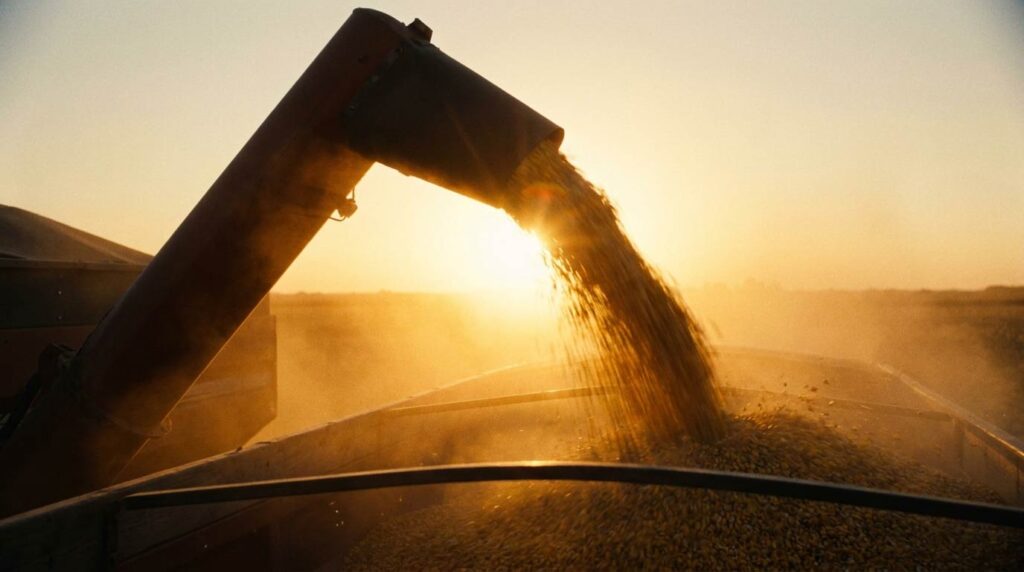
Propane use for grain drying varies with the crop, the dryer, and — more than anything — how wet the corn comes in. A season where corn comes off at 24% moisture will burn dramatically more than one where it comes off at 18%.
Rather than working from a rule of thumb, build your estimate from your own operation:
- Start with your dryer’s rated BTU input from the manufacturer’s plate
- Estimate hours per day during a hard push — many operations run dryers close to around the clock
- Convert to gallons (propane is roughly 91,500 BTU per gallon, adjusted for your dryer’s efficiency)
- Multiply by expected drying days for your acreage
- Add a wet-year buffer — plan for the wetter scenario, not the average one
The buffer is the part people skip. A wet fall can push propane use well past what a normal year would suggest, and it does so in exactly the weeks when everyone else in the Valley wants propane too.
Match Tank Capacity to Peak Demand, Not Average
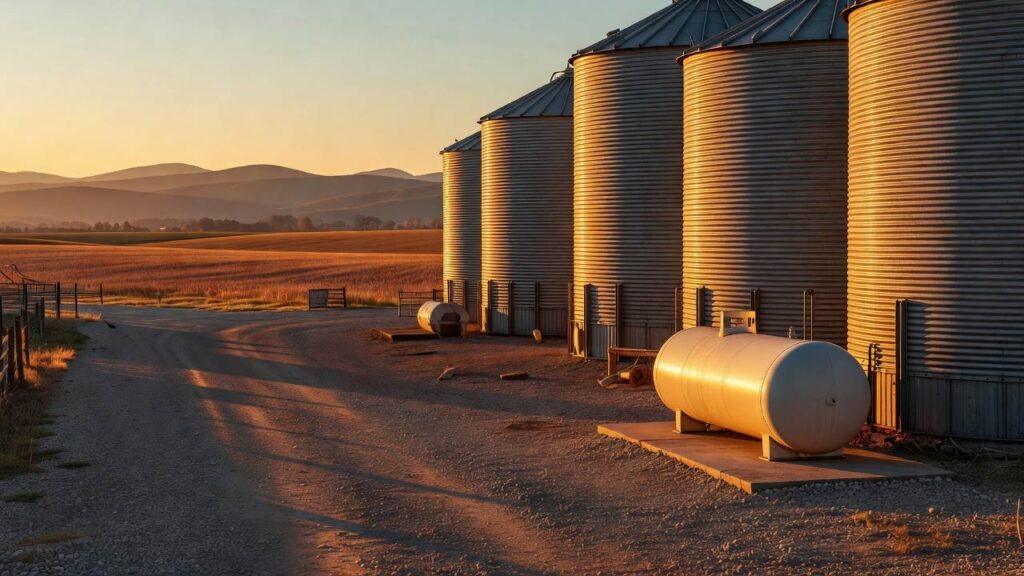
Here’s a detail that catches operations off guard: a propane tank’s usable capacity isn’t the number on the side. Tanks are filled to about 80% to allow for thermal expansion, so a 1,000-gallon tank gives you roughly 800 gallons of working fuel.
There’s a second factor that matters more during drying season — vaporization rate. A tank has to turn liquid propane into vapor fast enough to feed the burner, and its ability to do that depends on tank size, how full it is, and the outside temperature. A tank that’s adequate in mild weather can struggle to keep up on a cold morning when it’s down to a quarter full and the dryer is asking for everything it’s got.
If your dryer has ever seemed to lose heat late in a cold run, undersized vaporization is a likely culprit — not a bad burner. Talk to us before harvest and we can look at whether your current setup is sized right for your dryer’s demand, or whether a larger tank or a second tank makes sense.
Build a Refill Plan You Can Actually Follow
Once you know your peak-week burn and your usable capacity, the scheduling piece is straightforward:
- Divide usable gallons by daily burn to get your realistic days of runtime
- Set a refill trigger with margin. If you’ve got three days of runtime in the tank, calling at 30% doesn’t leave enough room. Trigger earlier during peak drying.
- Schedule a top-off before you start, not after you’re running
- Give us your drying window in advance so it’s built into the route
- Keep the monitor honest. If you have tank monitoring, confirm it’s reading correctly before the season, not during it.
During peak weeks we’re running propane across Rockingham County and the surrounding Valley all day. Knowing which operations are drying, and roughly when, lets us plan routes that keep everyone running instead of reacting to emergency calls.
Pre-Season Safety Walk
Drying season puts a propane system under sustained load, which is exactly when a marginal component shows itself. Before the first batch:
- Inspect the regulator and confirm it’s the right one for your dryer’s demand
- Check all connections and hoses for cracking, wear, or damage from equipment traffic
- Clear the area around the tank — no crop residue, no stored equipment, nothing that blocks access for a delivery truck
- Verify the delivery path is drivable after harvest traffic tears up a lane
- Confirm relief valves are unobstructed and the tank is properly secured
- Make sure everyone running the dryer knows where the shutoff is
If anything looks questionable, call us and we’ll come look at it. A leak test or a regulator check in September is a routine visit. In the middle of a drying run, it’s downtime.
A Local Partner Through Harvest
We’ve been supplying the Shenandoah Valley’s farms since 1942, and grain drying season is one of the times of year when being local actually matters. We’re member-owned, which means the people scheduling your propane deliveries live in the same county and understand what a stalled dryer costs.
Full-service propane means we don’t just drop off fuel. We can help with tank sizing, installation, monitoring, leak testing, and maintenance — so the system is right before the season starts.
Let’s Get Your Drying Season Planned
If you’d like help estimating your propane needs, evaluating whether your current tank can keep up, or getting on the delivery schedule for peak harvest weeks, we’re ready to serve you.
Give us a call at (540) 434-4321, or visit rockinghampetroleum.com to learn more about our full-service propane delivery for agricultural operations. The best time to have this conversation is before the corn comes in.