If you’ve ever watched a late frost flatten three weeks of greenhouse work in a single overnight, you already know how thin the margins can be for small-scale commercial growers in the Shenandoah Valley. Our spring weather is gorgeous — and unpredictable. A 70-degree afternoon in April can turn into a 28-degree night, and your seedlings don’t get a vote.
That’s where propane greenhouse heating earns its keep. Clean-burning, efficient, and reliable even when the grid flickers, propane has become the heating fuel of choice for many Valley growers looking to extend their season, protect their crops, and grow more predictably year-round. Here’s how it works, why it makes sense for our region, and what to think about as you plan your setup.
Why Propane Works So Well for Greenhouses
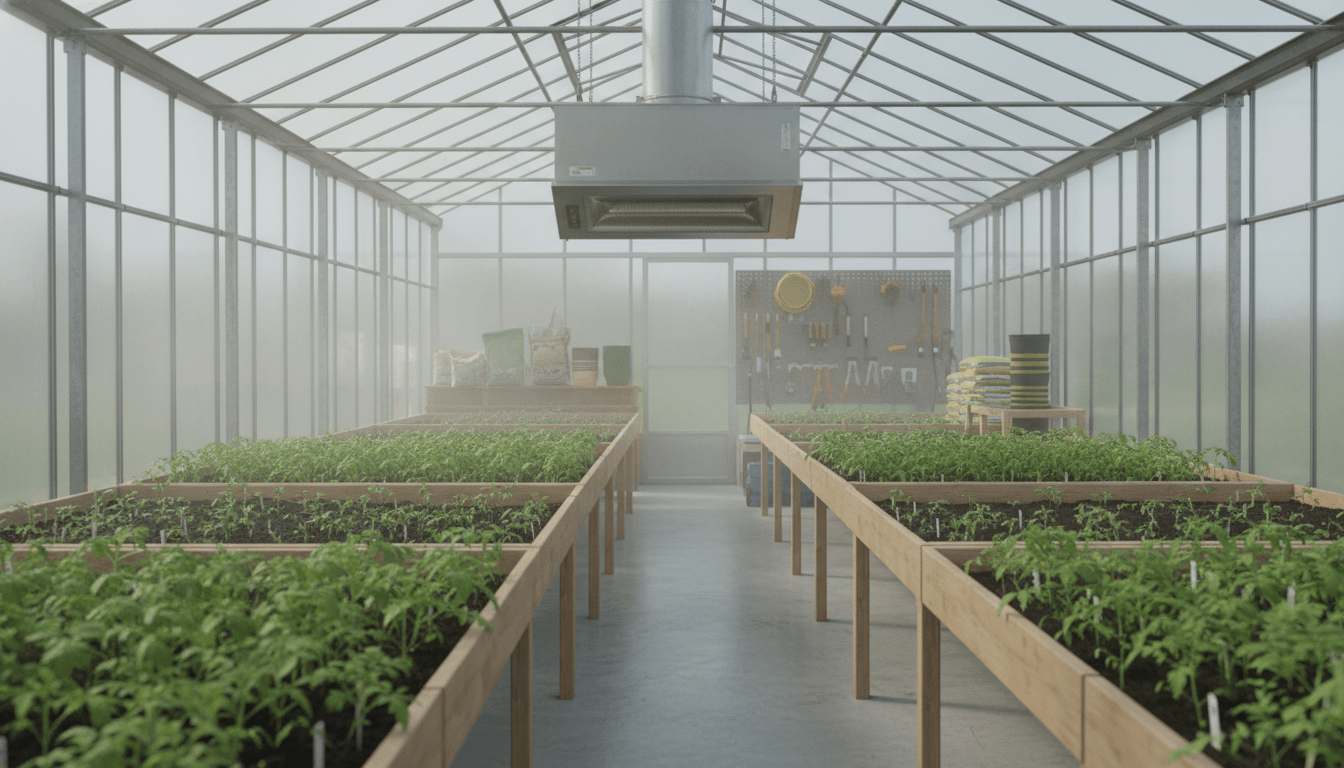
Greenhouses are unique buildings. They’re transparent on purpose, which is great for sunlight and terrible for holding heat once the sun goes down. The heating system has to respond fast, run cleanly, and produce reliable BTUs even on the coldest mornings.
Propane delivers on all three counts:
- High BTU output per gallon — propane produces roughly 91,500 BTUs per gallon, giving you the heating power needed to maintain temperature during cold snaps without oversized equipment.
- Clean combustion — propane burns cleanly with very low particulate output, which matters when you’re heating an enclosed space full of plants. There’s far less risk of soot buildup or fume issues compared to less-refined fuels.
- Off-grid reliability — propane systems don’t depend on natural gas mains, which makes them ideal for rural locations across Rockingham, Augusta, and Page counties. Your tank is your fuel supply.
- Wide equipment compatibility — unit heaters, radiant tube systems, hot water boilers, and CO₂ generators are all available in propane configurations from major greenhouse equipment brands.
- Scalable — whether you’re heating a 20×40 hoop house or a half-acre commercial range, propane storage and delivery scales easily.
For commercial growers especially, the combination of clean burn and high efficiency adds up to lower long-term operating costs and healthier crops.
Season Extension: What That Looks Like in the Valley
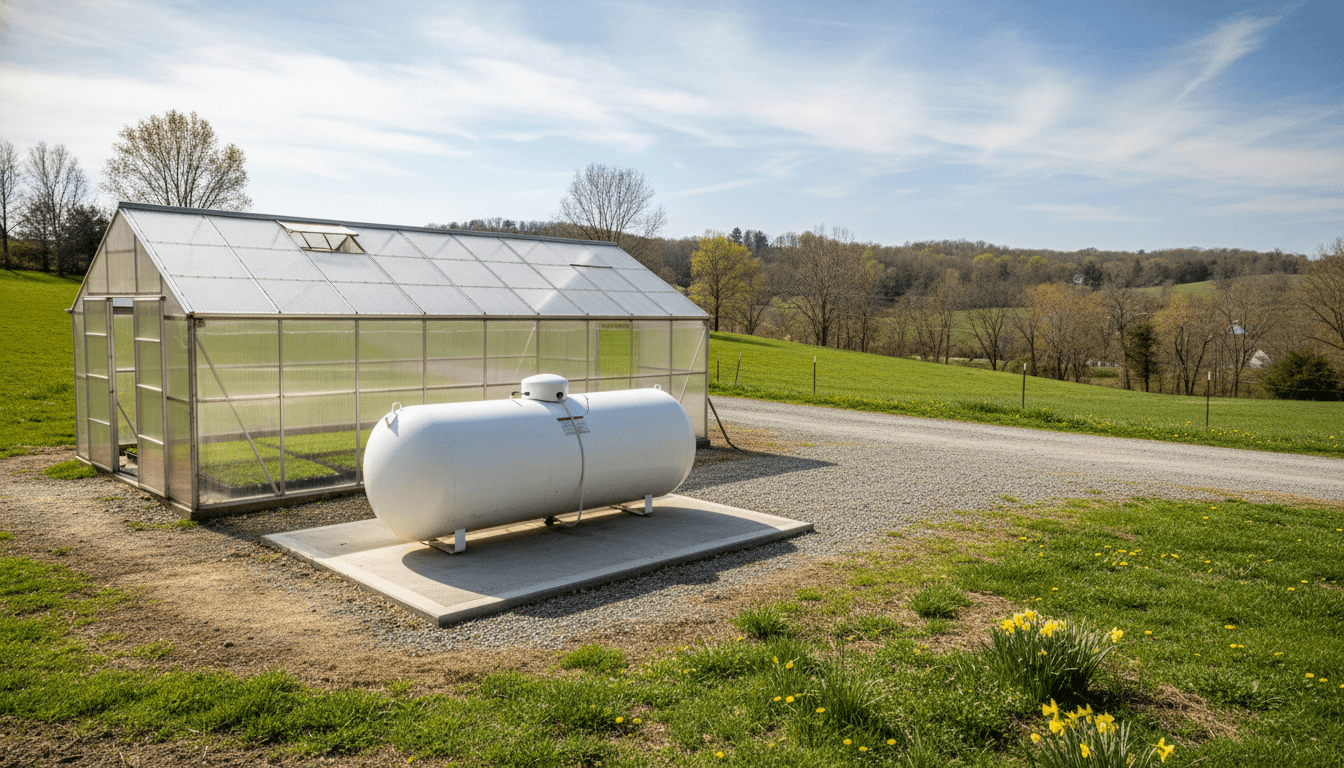
Season extension isn’t just about heat — it’s about the calendar flexibility heat gives you. Here in the Shenandoah Valley, our last frost typically lands in late April, and our first frost arrives by mid-October. That gives outdoor growers roughly five and a half months of frost-free production.
With a propane-heated greenhouse, you can realistically push that to 9–12 months depending on what you’re growing and how much you want to invest in heat. A few examples of what Valley growers do with extended seasons:
- Start tomato and pepper transplants in February for early-market fruits in June, beating the wave of mid-summer competition
- Grow cool-season greens November through April, supplying restaurants and farmers markets when outdoor production has stopped
- Carry over high-value perennials like cut flowers, herbs, and starter plants without losing them to winter cold
- Run a year-round CSA model with consistent winter offerings instead of a six-month cycle
Each step adds revenue without adding land, which is the kind of math small operations need.
Sizing and Setup: What to Consider
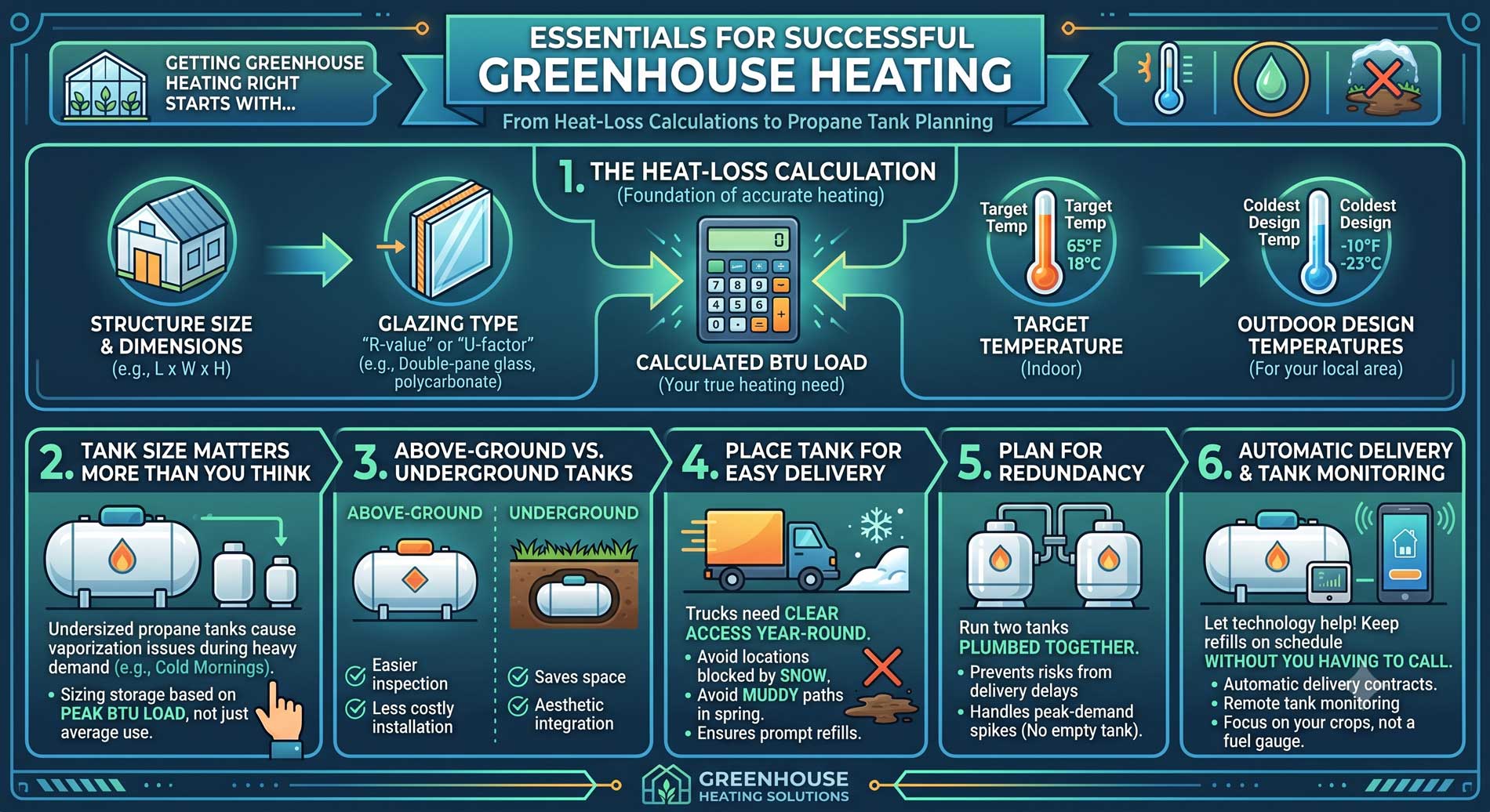
Getting greenhouse heating right starts with a heat-loss calculation that accounts for your structure size, glazing type, target temperature, and outdoor design temperatures for our area. A few practical considerations as you plan:
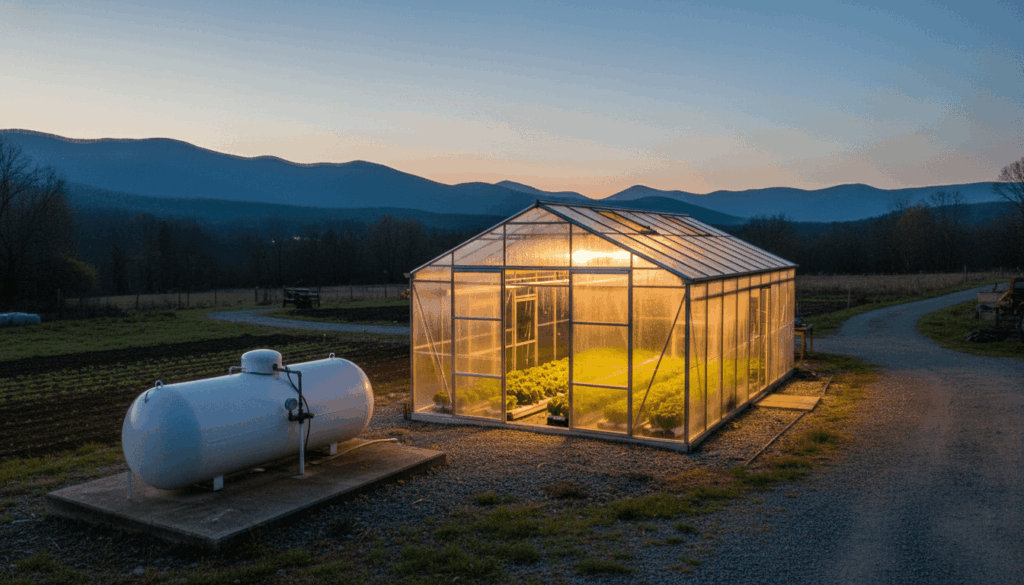
- Tank size matters more than you think. Undersized propane tanks cause vaporization issues during heavy demand, particularly on cold mornings. We help size storage based on peak BTU load, not just average use.
- Above-ground vs. underground tanks. Both work for greenhouse applications. Above-ground is easier to inspect and less costly to install; underground tanks save space and can be more aesthetically integrated. We can talk through what fits your site.
- Place the tank with delivery in mind. Our trucks need clear access year-round — a delivery point that’s blocked by snow or muddy in spring slows everyone down.
- Plan for redundancy. Many growers we work with run two tanks plumbed together, so a delivery delay or a peak-demand spike doesn’t risk an empty tank.
- Consider automatic delivery and tank monitoring. When you’re managing crops, the last thing you want is to babysit a fuel gauge. Automatic delivery (and remote tank monitors, where appropriate) keep refills on schedule without you having to call.
One more piece worth discussing with your installer: ventilation and CO₂ management. Some commercial growers intentionally use propane heaters that double as CO₂ generators to boost growth. Others prioritize sealed direct-vent systems to keep combustion gases entirely out of the growing space. Both are valid; the right choice depends on your crop and structure.
How Rockingham Petroleum Supports Valley Growers
We’ve been a member-owned cooperative serving the Shenandoah Valley since 1942, and we work with growers of every size — from backyard hoop houses to commercial operations supplying regional grocery chains. Our full-service propane program covers tank sales and installation, leak testing, regulator service, automatic delivery, and ongoing maintenance.
Because our delivery routes already run across Rockingham County and into surrounding areas, scheduling reliable refills during heating season is straightforward. And because we’re cooperative-owned, we have a real stake in the long-term success of local agriculture — when Valley farms do well, the whole region does well.
If you’re new to greenhouse heating, our team can walk you through tank sizing, installation, and ongoing service. If you’re already running propane and just want a more reliable supplier, we make switching easy.
Quick Planning Checklist for Greenhouse Propane
Before you commit to a heating system or supplier:
- Calculate or have a heat-loss estimate done for your structure
- Decide on target winter temperatures based on your crops
- Match heater BTU rating to peak load, with some headroom
- Choose a tank size based on peak demand, not just storage capacity
- Confirm your installer’s experience with greenhouse-specific applications
- Set up automatic delivery so you’re never caught short on a cold night
Greenhouses make small acreage productive. Propane keeps them running through the cold months when it matters most.
If you’d like to talk through a propane setup for your greenhouse — or if you’re a commercial grower looking for a steady, dependable fuel supplier — give us a call at (540) 434-4321 — we’re happy to help. You can also visit rockinghampetroleum.com to explore our propane services across the Shenandoah Valley and Rockingham County.